
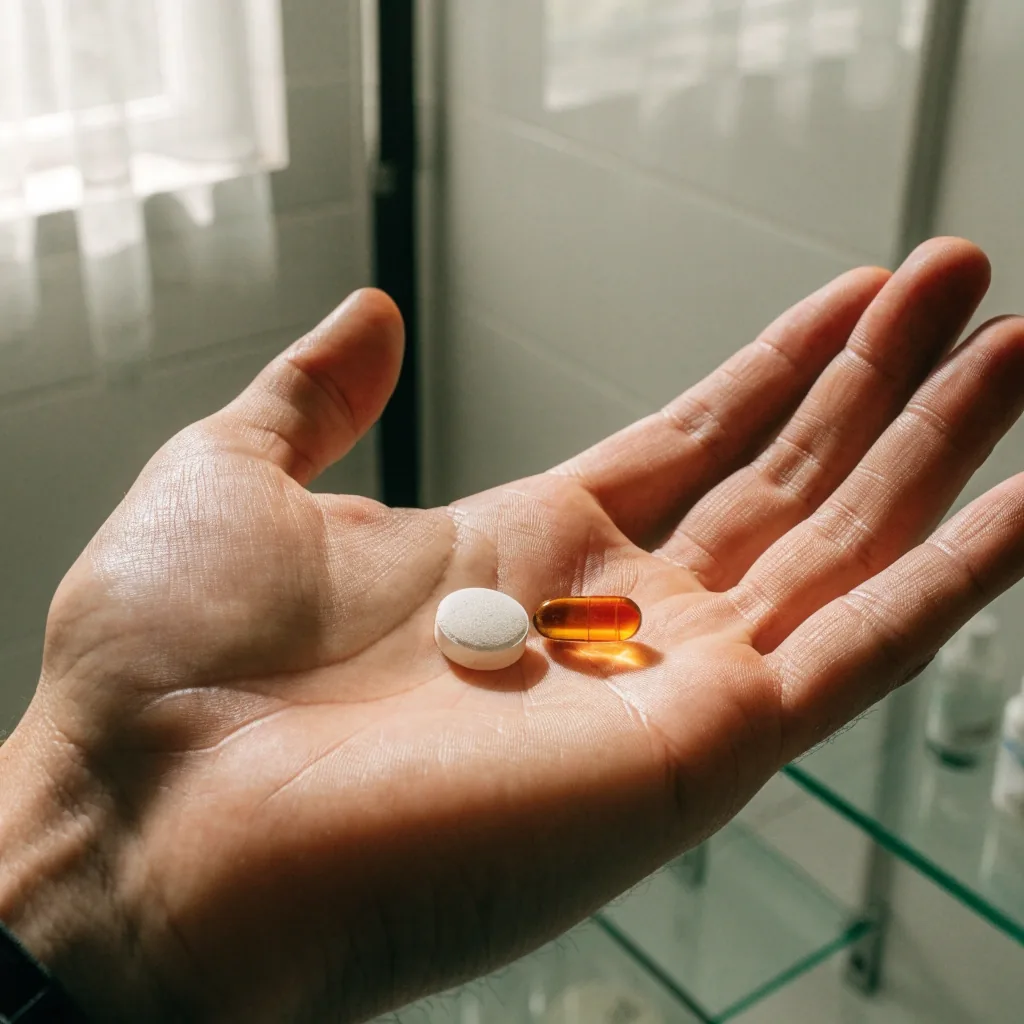
Mainstream once-daily multivitamin
Broad vitamin and mineral coverage compressed into one or two units a day. Built for people who want a single fixed step in the morning and nothing more to remember.
Broad daily coverage

Which capsule, which mineral, which daily habit actually fits an ordinary week. We read labels on Indonesian shelves and write about vitamins and minerals for men in plain English, so you can compare before you buy.
VitalIndo is built around what is in the bottle, what format suits your routine, and how you read a label without getting lost. We write ingredient explainers, side-by-side product comparisons, and practical routine guides. Every page sticks to what a label and a manufacturer description can support — nothing more.
That means no promises about what a capsule will do for you. Supplements are a supporting input, not a substitute for eating properly or sleeping enough. Our job is to help you tell a zinc capsule from a saw palmetto blend, and to explain why someone would pick one over the other. The rest of the decision stays yours, made with clearer information.
Indonesia’s supplement shelf has its own vocabulary, and it pays to know it early. Terms like suplemen pria, vitamin pria, formula harian, and bahan aktif appear on almost every listing. Once you recognise them, comparing two bottles takes two minutes instead of twenty.

The aisle most of our readers are actually standing in — three formats, two shelves, one confusing set of promises.
If you are new to this, do not start with the products. Start with the ingredients. The guide walks through the nutrients that show up again and again in men’s formulas on Indonesian shelves: zinc, vitamin D3, magnesium, the B vitamins, vitamin C, and extracts like ginseng, maca, ginkgo, and saw palmetto.
Each entry answers the same boring but useful questions. What is this ingredient usually included for? Which forms does it appear in on a local label? What does it typically get paired with? Zinc, for example, shows up alongside B6, selenium, magnesium, or vitamin C so often that it is practically a default template in men’s daily formulas.
You will also learn what BPOM and halal markings mean on a listing, and why some shoppers filter by them before anything else. That is not marketing; it is simply how the buying decision works in this market.

Once you know the ingredients, the product pages make more sense. Our comparisons put popular products for men next to each other on the dimensions that actually differ: which nutrient family the formula belongs to, what format it comes in, and what kind of daily use it is positioned for. We do not rank products with stars or invented scores.
Broad vitamin and mineral coverage compressed into one or two units a day. Built for people who want a single fixed step in the morning and nothing more to remember.
Broad daily coverage

Centred on plant extracts such as ginseng, maca, or saw palmetto. Usually positioned around a narrower use case, with a serving of two or three capsules rather than one tablet.
Narrower focus, more units
You will also see where two products are more alike than their packaging suggests. That overlap is usually the most useful thing to notice, and it is the fastest way to cut a fifteen-bottle shelf down to two or three realistic options.
“Energy and endurance” is the most common phrase in this category and also the vaguest. On a supplement label it usually points to B vitamins, magnesium, iron-free mineral blends, or stimulant-free herbal extracts. None of that is a promise of anything dramatic. It is daily nutritional support, and how much you notice depends on what your baseline looks like.
Ginseng, maca, and ginkgo appear in this cluster often. They are typically positioned around everyday vitality rather than short-term effect. If you drink three coffees before noon, no capsule will outrun that, and any page telling you otherwise is selling rather than explaining.
The honest framing: energy and endurance supplements work alongside food, movement, and sleep. They do not replace the conversation about why you are tired at 3pm.
B vitamins and magnesium
The most common pairing behind an energy claim. Both appear in almost every daily formula we compare, usually at modest levels.
Stimulant-free herbals
Ginseng, maca, ginkgo. Positioned around everyday vitality. Read the extract ratio, because it changes the serving size completely.
Iron-free mineral blends
Plenty of men’s formulas drop iron by design. Worth checking if you already take a separate mineral product.
Format matters more than most buyers expect, and it is the reason a surprising number of bottles get abandoned half-finished. The practical differences are swallowing comfort, dose size, and how many units you take per day.
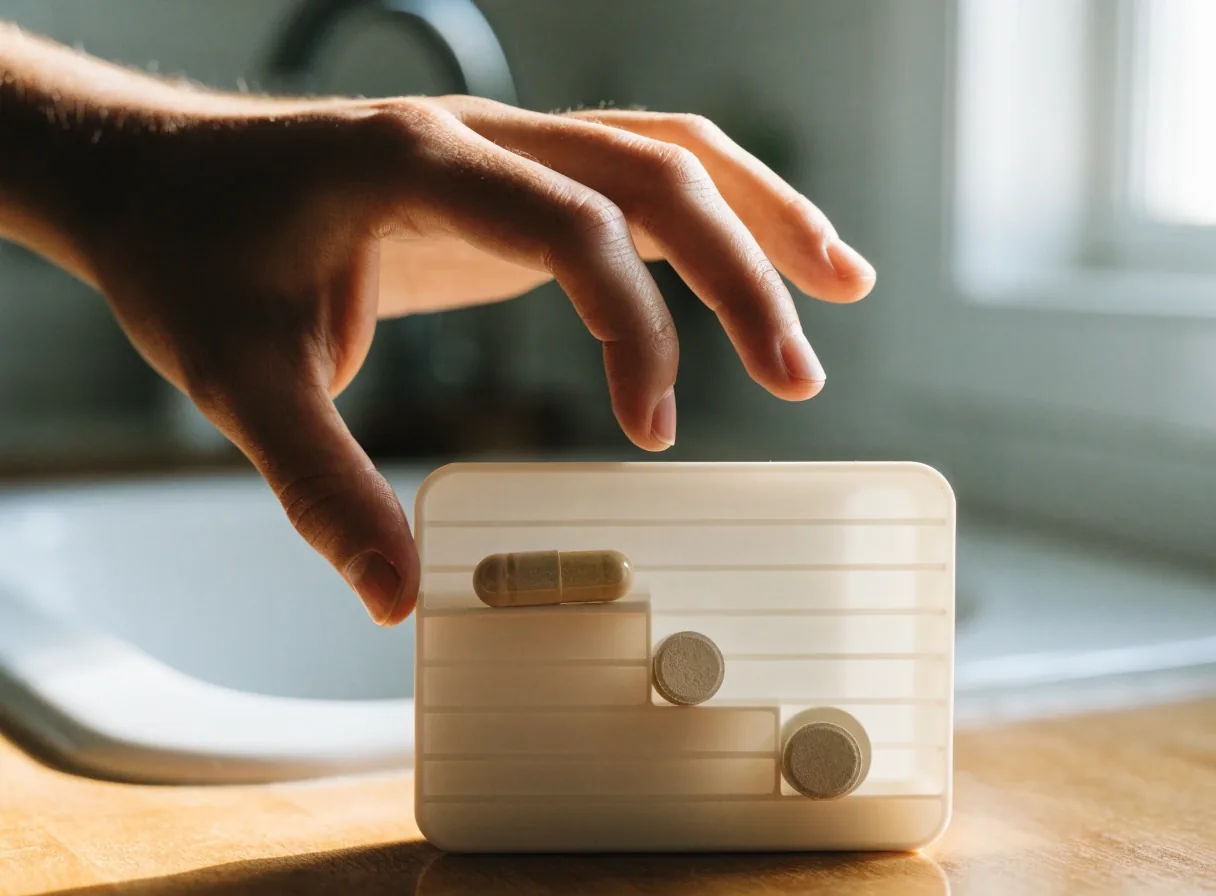
If you have abandoned a supplement before finishing the bottle, format is often the real reason rather than the ingredients. Pick the one you will actually take at the same time each day, even on the days you leave the house in a hurry.
The formula that works is the one that survives a chaotic Tuesday. Our Daily Routine & Lifestyle page treats supplements as one line item in a bigger list, next to meals, movement, and sleep, because that is how they actually function in real life. Habit stacking beats willpower every time.
Anchor it
Attach the capsule to something you already do without thinking: your morning coffee, your commute, or brushing your teeth. The habit carries the supplement, not the other way round.
Sequence it
Take fat-soluble nutrients with a meal that contains some fa. Keep it simple; a well-sequenced two-item routine beats a carefully scheduled six-item one you quit in nine days.
Miss a day
Skip it and carry on. Doubling the next dose to catch up is a bad idea, and a missed day does not undo weeks of consistency. Boring advice, but it keeps a routine running for months rather than a week.
Supplements sit inside a wider category of healthy lifestyle products in Indonesia, and it is worth knowing where the edges are. Shaker bottles, portion containers, and fitness accessories share shelf space with vitamins, and the marketing language overlaps heavily between the two.
We keep our focus on ingestible products: multivitamins, minerals, vitamin blends, and natural capsules for strength and vitality. That boundary keeps the site useful instead of turning it into a general store with a wellness tab. If a product is not a supplement, we will say so plainly and move on. Clarity is the whole point of this resource.
VitalIndo is an editorial team based in Jakarta, at Jl. HR Rasuna Said Blok X-5, Kuningan Timur. We read labels, compare listings on Indonesian marketplaces, and describe what is printed on the packaging rather than what the category implies.
We are not a pharmacy and we do not give medical advice. If you have a health condition or take prescription medicines, talk to a qualified professional before adding anything to your routine. That is not a line we hide at the bottom of the page; it is how we think about the whole subject.
You can reach the editorial team any time through the Contact page with a correction, a question, or a product you would like to see covered.
The products that dominate men’s shelves in Indonesia tend to fall into four groups. Each group exists for a reason, and none of them is universally better than the others. Once the structure is clear, brand names matter less and ingredient lists matter more.
Mainstream daily multivitamins
The widest group on the shelf and the easiest to compare. One or two units a day, broad mineral coverage, and fairly consistent labelling across brands sold here.
Vitamin pairings
D3 with K2 is the clearest example. Two nutrients sold together because they are usually taken together, in a softgel format that suits fat-soluble ingredients.
Herb-led capsules
Ginseng, maca, ginkgo, saw palmetto. Servings are usually larger here, so check how long one container actually lasts before comparing price per unit.
Age-focused formulas
Built for men at 50 and beyond, often adjusting mineral levels or dropping nutrients entirely. Whether that matters for you depends on your diet and what you already take.
The five that come up most often, answered the same way we would answer them over the counter.
No. They are positioned as daily nutritional support alongside your normal meals. A multivitamin or mineral capsule adds to a diet; it does not stand in for one. Meals still carry the bulk of what you need.
BPOM is Indonesia’s national agency for food and drug control. When a listing carries a BPOM registration, the product has been through the country’s registration process for that category. Many buyers filter by it before comparing anything else, which makes it a practical first line in the decision.
A multivitamin is built around vitamins and minerals with broad daily coverage intent. A botanical blend centres on plant extracts like ginseng, maca, or saw palmetto and is usually positioned around a narrower use case. Comparing the two directly is often apples-to-oranges, and the serving sizes differ enough that price per container tells you very little.
Fewer than most people assume. Overlapping formulas can double up on the same nutrient without you noticing, especially zinc and the B vitamins. Read the labels together rather than separately before combining anything, and treat every added product as one more thing to keep track of.
Age-focused men’s vitamins exist because nutritional needs shift with age, and some formulas adjust mineral levels or drop certain nutrients entirely. Whether that matters for you depends on your diet and what your current formula contains. Compare the two lists side by side; the overlap usually answers the question faster than the marketing copy does.
Most people begin with the ingredient guide and then move to product comparisons. If you already know what you are taking, the routine page is probably the fastest win. Whatever you pick, bring one habit with it: read what is on the label, write down what you actually take, and give it enough weeks to mean something.
Editorial desk
VitalIndo
Jl. HR Rasuna Said Blok X-5, Kuningan Timur
Jakarta Selatan, 12950, Indonesia
Monday to Friday, 9:00 AM – 6:00 PM. Corrections and questions are welcome; the Contact page reaches the same team.
Supplements are not a substitute for a balanced diet or for advice from a qualified professional.